

Necessary framework conditions to avoid lock-in effects and to ensure a sustainable green hydrogen supply
Sub-project: Impact of international H2 markets
Hydrogen will play a key role in the future energy supply. The sources of this hydrogen are still undecided, partly because demand is currently low and the necessary production and transport infrastructure is still under development or construction. It is highly likely that initially not only green hydrogen sources, but also other hydrogen sources will be used. How can we ensure that this path is pursued strategically and that there are no lock-in effects from investments in technologies that are not sustainable? To this end, the regulatory framework must be designed to promote the development of a hydrogen infrastructure and guarantee a competitive and, in the medium term, climate-neutral hydrogen supply. Investments made today and in the near future must be managed to ensure a cost-efficient and sustainable hydrogen supply.
The collaborative project NoRaLock-H2 therefore aims to test the impact of existing framework conditions in an agent-based model to determine whether they can be used to simulate an ideal, cost-efficient path, and if so, how these framework conditions should be adapted and timed to approximate this path. The research questions of the IZES sub-project ‘Impact of International Markets’ assesses the global competitive situation in terms of supply prices and quantities on the German market. This provides important input data which influence the decisions made by the agents in the research partners’ models. Global trade is represented by the IZES trade model.
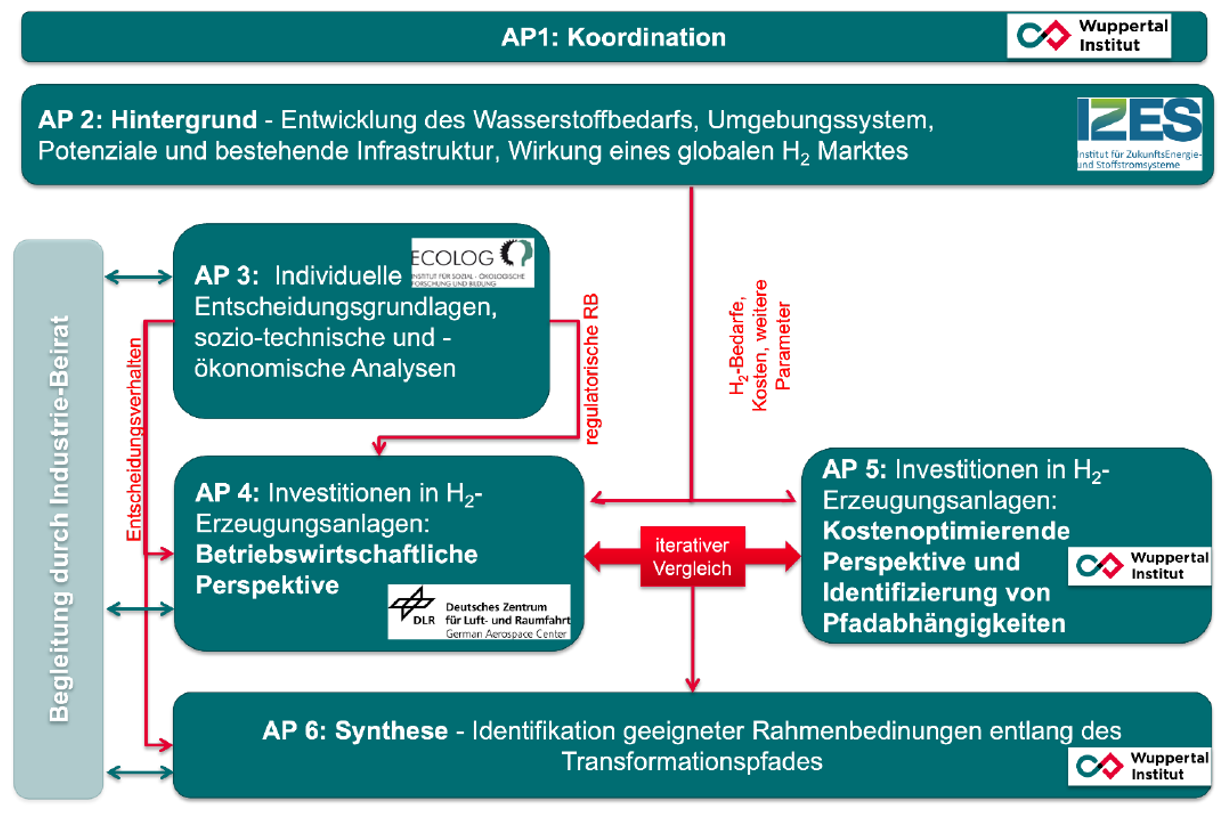
NoRaLock-H2 project structure (Source: Christine Krüger, Wuppertal Institut)
Project partner:
- Wuppertal Institut
- DLR – Institut für Vernetzte Energiesysteme
- ECOLOG – Institut für sozial-ökologische Forschung und Bildung
Duration:
01/2023 – 03/2030
Project Management:
Juri Horst
Department:
Energy markets