
Biomass Short Study NRW 2025
Inventory Analysis of Bioenergy Plants and Conceptual Design of a Bioenergy Potential Study
Background
The State Agency for Nature, Environment and Climate NRW (LANUK) is conducting comprehensive studies to assess the potential of renewable energies (RE) in North Rhine-Westphalia. These potential studies provide essential data to support the energy transition and are made available to the public as well as to professionals in planning, administration, and industry through the Energy Atlas NRW. In the field of bioenergy use, the last comprehensive potential study was conducted in 2014. Since it no longer reflects the current state of development, the existing bioenergy plants and the potential for electricity, heat, and gas generation from biomass are to be reassessed.
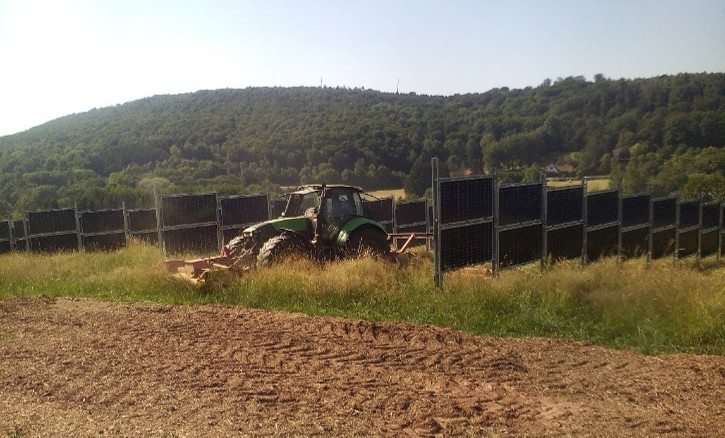
One Example of Biomass Potentials in Agriculture (Source: IZES gGmbH)
Project Aim
The project pursued two main objectives: first, to record and describe the current stock of bioenergy plants in North Rhine-Westphalia. For this purpose, the datasets available at LANUK were to be reviewed and, where possible, supplemented with additional data. In this way, existing data gaps were to be closed, creating a validated data basis for the biomass potential study. Second, a study was to be prepared to determine the potential of biomass for electricity, heat, and gas supply. This study was intended to provide guidance and recommendations on the approach and methodology for developing a state-wide biomass potential study.
Project Implementation
The project was carried out in close cooperation with LANUK. In addition, the initiative was accompanied by an advisory group consisting of representatives from LANUK, the Ministry for Economic Affairs, Industry, Climate Protection and Energy (MWIKE), the Ministry for Environment, Nature Conservation and Transport (MUNV), and NRW.Energy4Climate.
Inventory Analysis of Bioenergy Plants
In the first part of the project, the focus was on collecting and processing the datasets on bioenergy maintained by LANUK and enriching them with additional data. For this purpose, a stakeholder workshop was conducted to identify the relevant biomass flows and determine other relevant data sources. The datasets identified during the workshop were subsequently collected and processed. During this process, the collected data were linked and cleaned. The results of the data processing were documented and summarized in an inventory analysis of the current plant landscape.
Design of a Study to Determine Biomass Potential
In the second part of the project, a methodology specifically adapted for NRW was developed to assess biomass potentials for electricity, heat, and gas supply. Existing biomass potential analyses were reviewed and evaluated for their suitability for application in NRW. In addition, the identified approaches were discussed in a stakeholder workshop with representatives from the forestry, agriculture, and waste sectors, focusing on the underlying assumptions and constraints of the methods. The results of this process were compiled in a study and accompanied by further recommendations for conducting the biomass potential analysis in the following year.
Client:
Landesamt für Natur, Umwelt und Klima NRW (LANUK)
Laufzeit:
06/2025 bis 09/2025
Kontakt:
Florian Noll
Arbeitsfeld:
Stoffströme / Forschungsgruppe Transformationswissen